
Beyond Compliance: A Strategist Guide To Making A11y Matter To Gen Z
Most STEM and research organizations view digital accessibility as a "checklist" item—a legal hurdle to be cleared. However, for Gen Z, accessibility is a core value.
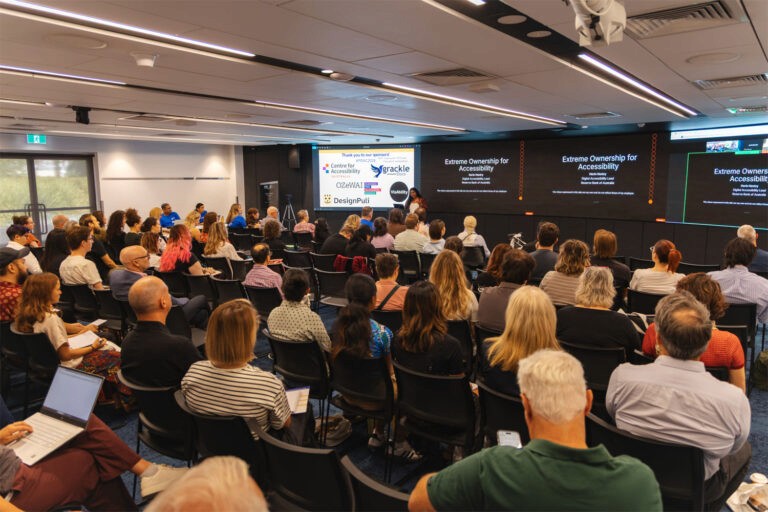
Case Study: The PDAC Keynote
The Eshal Lab facilitated a strategic shift for digital accessibility veterans by bridging the gap between institutional standards and Gen Z sociology.
Challenges:
Generational Resonance Gap: High-level institutional messaging failing to capture or retain the interest of a Gen Z audience.
Theory-Heavy Implementation: Digital accessibility often treated as a "legal checklist" rather than a core strategic value for future-proofing.
Engagement Friction: Difficulty articulating complex, nuanced topics to a demographic that prioritizes authenticity and digital fluency.
Results:
Peer-Validated Authority: Formally recognized as a "standout" speaker, rivaling the poise and clarity of industry veterans with decades of experience.
Strategic Essentiality: Methodology deemed "essential for the future of the field" by innovation and accessibility experts.
Measurable Insight: Successfully moved the discourse from abstract theory to actionable, "here and now" strategic dialogue.
"Alina was an absolute standout. She blew us all away with her insight and fresh perspective. Her focus on how to make complex dialogue relevant to Gen Z is not only timely, but essential for the future of our field," said Amanda Mace, Innovation & Accessibility Expert.